US Park Visitor Fined for Catching Python Wins Court Reversal
A man who caught a Burmese python in a Florida national park to help the ecosystem received a fine that was later dismissed in court.
 👥Society
Photo: UNIAN
Key points
- Tourist fined for catching a python in Everglades park
- Court dismissed the ticket due to paperwork errors
- Federal park rules clashed with state conservation goals
An unusual incident in Florida's Everglades National Park has highlighted the friction between citizen conservation efforts and strict federal regulations. While visiting the park, Yatir Nitzani encountered a Burmese python and decided to capture it, believing he was protecting the local environment from an invasive predator. Instead of receiving gratitude, however, the tourist faced a monetary penalty from park authorities.
Invasive Species Versus Federal Rules
Burmese pythons have become a devastating ecological problem in South Florida, preying heavily on native mammals and birds. Although state programs actively encourage trained volunteers to remove these invasive snakes, national parks maintain distinct federal restrictions prohibiting visitors from handling wildlife without specific permits.
A park ranger issued Nitzani a 180-dollar ticket for handling a wild animal on federal land. Disagreeing with the penalty, the man argued that removing a harmful predator should not be treated as an offense. He decided to challenge the ticket in federal court, bringing along wildlife advocate Ron Magill to support his stance.
Court Outcome and Broader Questions
Ultimately, the federal court dismissed the citation, though Nitzani noted that they were simply told the paperwork was filled out incorrectly rather than receiving a detailed ecological justification. While the financial dispute was resolved, the case left lingering questions about how tourists should respond when encountering invasive species in protected areas.
«A tourist's attempt to protect the local ecosystem nearly resulted in a fine due to strict federal boundaries».
For residents of Shepetivka and our local community, this international story serves as an interesting parallel regarding civic initiatives and legal frameworks. It demonstrates that well-intentioned individual actions within public spaces or community areas must still comply with established regulations. Engaging with local authorities and following proper legal channels remains essential to avoid misunderstandings when attempting to solve civic or environmental issues.
Source UNIAN — unian.ua/curiosities/zloviv-pitona-shchob-uryatuvati-prirodu-a-otri… ↗
Read next
 ⚽Sport
Dynamo Kyiv Top Scorer Matviy Ponomarenko Injured Ahead of UPL Matches
Dynamo Kyiv striker Matviy Ponomarenko missed the UPL Matchday 13 clash against Obolon due to a thigh injury. The player is recovering individually and is likely to miss …
 🚨Events
Case of grooming two young girls via Telegram sent to court
In Rivne Region, prosecutors completed an investigation into a 38-year-old man accused of sending prohibited content to minors. The suspect faces charges of child groomin…
 🛡️Security
Death toll from Russian attack on Dymer rises to two as rescue operations continue
The death toll from a Russian strike on a residential building in Dymer, Kyiv region, has risen to two, with four others injured. Rescuers are continuing to search the ru…
 🚨Events
Pentagon Chief Pete Hegseth Restricts Defense Relations Between US and Canada
The U.S. Department of Defense has implemented new restrictions on defense interactions with Canada, affecting military social and academic contacts.
 💼Economy
Administrative price caps on electricity hinder investment in Ukraine's energy sector
Manual price regulation in the electricity market creates serious barriers to attracting investments in generation and restoring damaged facilities.
 👥Society
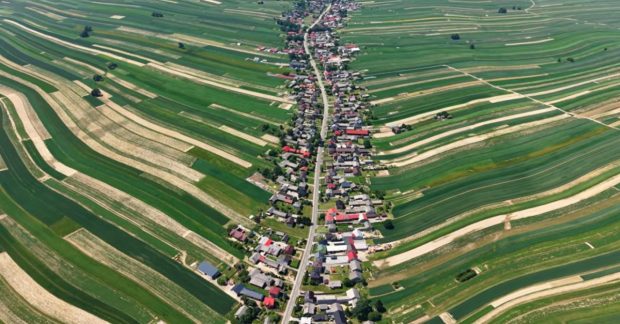
A unique European village: How a settlement along a single 9-kilometre road has survived for centuries
In the Polish village of Suloszowa, houses have lined a single road for over 700 years, creating a unique landscape with fields stretching behind them.